My Story and Photos from some Journeys in Tibet, Himalayas, Yunnan, Shangri-La and China
During these travels, I photographed landscapes, mountains, villages, people, culture and daily life. I also met and spoke with local people, including Tibetan people, Buddhist communities and the Naxi people, whose traditions and ways of life made a strong impression on me.
Tibetan People, Buddhist Culture and the Naxi People – Photography & Video
I will try to share and give my understanding, enormous admiration and respect for the world famous minorities (Naxi people), tibetan people and buddhists in this article with photo gallery. A modern and material society of people that still in 2026, manage to live in harmony with nature. Naxi people with Dongba religion, culture and tibetan people and buddhists with their religion and culture. They living high into the mountains (Himalaya). (Their holy mountains).
In this travel story and photo gallery, I want to share my understanding, admiration and respect for the Naxi people, Tibetan people and Buddhist culture I met during my journeys.
I was deeply moved by people who live close to mountains, nature, tradition and faith. In places such as Yunnan, Tibet and the Himalayan region, I experienced cultures where daily life, religion, family, animals and nature are strongly connected.
The Naxi people, with their Dongba culture and traditions, and Tibetan Buddhist communities, with their spiritual life and respect for sacred mountains, gave me a deeper understanding of how people can live with humility, strength and respect for nature.
For me, this was not only a journey through landscapes. It was also a journey into different ways of living, believing and understanding the world.
Why?
The Naxi people, an ethnic minority group residing in the Yunnan province of southwestern China. They are not chinese but a very old minority.
They are the keepers of Tibet’s earliest voice — the voice of snow, fire, wind, and wild mountain warriors.
They traditionally inhabit the foothills of the Himalayas, an area characterized by stunning landscapes, including lush forests, flowing rivers, and majestic mountains. Living in such a natural environment has deeply influenced their way of life, fostering a strong connection to the land and a harmonious coexistence with nature. The Naxi people have a unique cultural history that reflects their harmonious relationship with nature.
The Dongba script of the Naxi people is one of the last surviving pictographic scripts on Earth. Its characters are not alphabets but living images — mountains, animals, deities, sky, death, birth.
They embrace all living thing
The Naxi culture is closely linked to that of the Tibetan people, as both groups share certain geographical and historical ties.
Still in 2026, they all have enormous respect for the nature. The Naxi people also hold a deep spiritual connection to nature, often incorporating elements of Tibetan Buddhism into their belief system.
Tibetan Buddhism, with its reverence for the natural world and emphasis, has played a significant role in shaping the Naxi worldview.
Rituals, ceremonies, and festivals often celebrate the cycles of nature. They prohibits the killing of animals and advocates compassion towards the environment.
Despite the modernization and changes in lifestyle that have occurred over time. They have proved that they still manage to have control and balance between a premodern past (a world inhabited by spirits, magic, etc) and a modern present/future (a world seemingly dominated by materialism, development, self-gratification, etc).
Naxi and tibetan people have preserved many aspects of their traditional way of life. Their close relationship with nature continues to influence their daily practices, cultural expressions, and spiritual beliefs, reflecting a harmonious coexistence with the natural world.
Buddhism told that we must embrace all living things "as a mother cares for her son, her only son".
FREEDOM FOR TIBET AND ENVIRONMENT
Culture, Nature and a Fragile Balance
During my journeys in Yunnan, Tibet and the Himalayan region, I experienced people and cultures with a deep connection to nature, faith, family, animals and tradition.
To me, this harmony felt powerful and beautiful. I saw people who seemed to live with less material focus than many of us are used to in the modern world. They appeared calm, kind and deeply connected to their surroundings. I do not want to romanticize another culture or claim that I fully understood everything I saw, but the experience made a strong impression on me.
At the same time, this balance between culture and nature is fragile. Modern development, urbanization, new infrastructure, hydropower projects, mining, tourism and changing ways of life can place pressure on landscapes, rivers, traditions and local communities.
Yunnan is known for its rich biodiversity, ethnic diversity and dramatic mountain landscapes. Tibet and the Himalayan region are also connected to some of Asia’s great rivers, sacred mountains and important cultural traditions. When such places change, it is not only nature that is affected. Culture, religion, identity and ways of life can also be changed.
For me as a photographer and filmmaker, this made the journey even more meaningful. I was not only photographing beautiful mountains, people and old towns. I was also witnessing a world where nature, culture and spirituality are closely connected — and where that connection needs respect and protection.
These experiences made me think more deeply about freedom, nature, culture and responsibility. They reminded me that photography can be more than documentation. It can also be a way to show respect, raise awareness and share the value of places and people that should not be forgotten.
UNESCO World Heritage site – Lijiang Old Town
Lijiang Old Town in Yunnan became one of the most memorable cultural places I visited in southwest China. The old town is known for its narrow lanes, canals, wooden bridges, courtyard homes and traditional Naxi architecture.
Lijiang is also closely connected to the Naxi people, their history, music, writing, religion and relationship with nature. The town lies in a fertile mountain basin at high altitude, surrounded by dramatic landscapes and the powerful presence of Jade Dragon Snow Mountain.
For me, Lijiang was not only beautiful to photograph. It felt like a place where culture, daily life, faith and landscape belonged together.
During my journey, I was also drawn to the strong connection between Lijiang, Yunnan, Tibetan culture and the mountain world of the Himalayas. These areas have long been shaped by travel routes, trade, faith, local traditions and meetings between different cultures.
To travel from old towns and valleys up toward the high mountains was an enormous experience. I reached around 4,600 meters, where the air was thin, the body had to adapt, and the mountains felt almost overwhelming.
Standing there, close to sacred mountains and powerful landscapes, gave me a feeling I will never forget. It made the journey deeper than photography alone. It became a meeting with culture, nature, faith, altitude and my own limits.
Naxi - Religion . Spiritual Life - Use The Only Living "PICTOGRAPHY" In The World Today
The Dongba tradition is one of the great treasures of Naxi culture. The word “religion” can be understood here in a broad sense, as a system of belief, rituals, morality, ethics and spiritual life.
A Dongba priest, sometimes described as a shaman-priest, has traditionally played an important role in Naxi religious and cultural life. The Dongba tradition is closely connected to nature, ancestors, rituals, manuscripts and pictographic writing.
Dongba script is an important carrier of ancient Naxi civilization and culture. It is often described as one of the world’s last living pictographic writing traditions, still connected to Naxi identity and heritage today.
At the heart of Dongba belief is a deep respect for nature. Mountains, rivers, animals, plants and the many forms of life in the universe are understood as having spirit and meaning.
For me as a photographer, this made the Naxi culture especially powerful to experience. It showed how faith, nature, daily life and tradition can be deeply connected.
Buddhist Culture, Yunnan and the Mountain World
Buddhism in Tibet and Yunnan is shaped by many cultures, landscapes and traditions.
I was deeply moved by the Buddhist culture I experienced. What stayed with me was not only temples, prayer flags, monks or religious symbols, but also the calmness, kindness and respect I felt in many of the people I met.
I do not want to romanticize another culture or pretend that I fully understood everything I saw. But as a visitor, I felt that many people seemed to live with a strong connection to family, faith, nature, animals and daily life. In a world where money and material things often take so much space, this made a strong impression on me.
The way people welcomed visitors also stayed with me. I experienced curiosity, patience and kindness. As a photographer, this reminded me that respect must always come before the image. When photographing people, religion and culture, I had to slow down, observe, ask when needed, and understand that some moments are private or sacred.
Buddhist culture, Tibetan traditions, Naxi heritage and the mountain landscapes all became connected in my memory. They helped me see that photography is not only about documenting what is visible. It is also about trying to understand atmosphere, values, silence, faith and the way people live close to nature.
4K-Videos - Slideshows
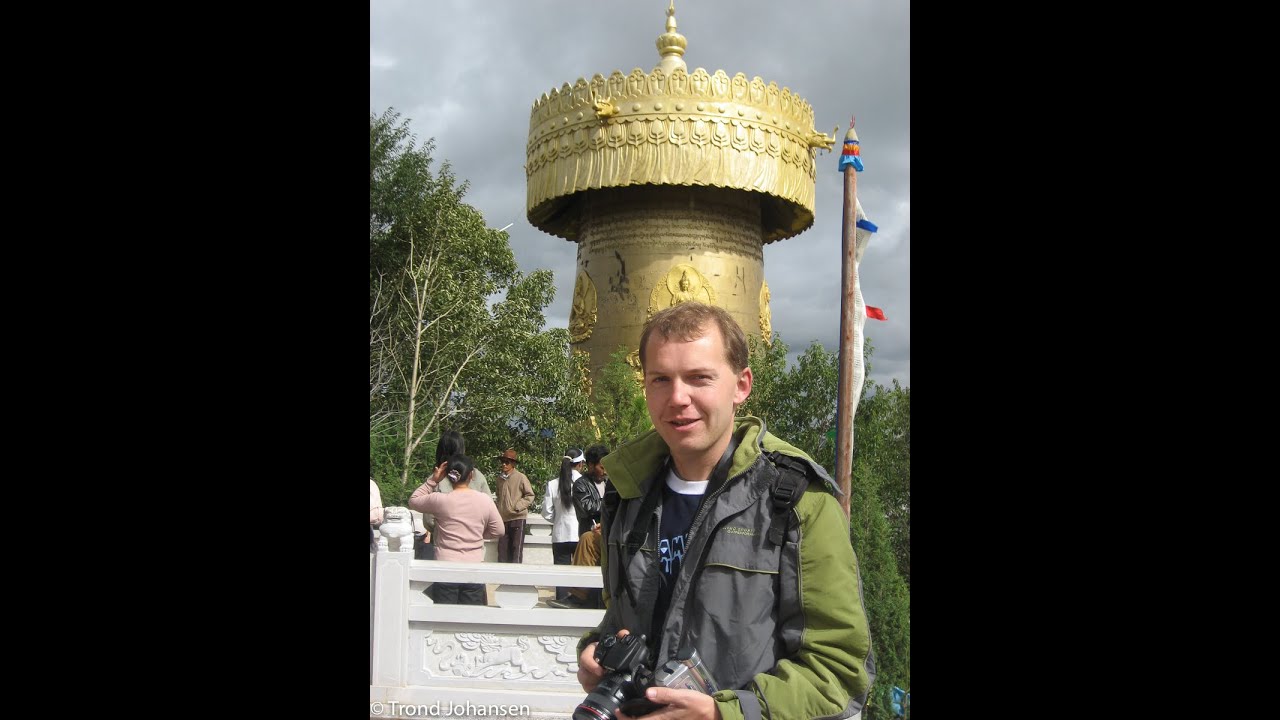
A Visual Story from My Journeys to Tibet and the Himalayas
Photography, culture and peaceful travel moments from Tibet, the Himalayas and Yunnan
A peaceful visual journey through Tibet, the Himalayas and Yunnan
Harmony with Nature – Buddhist Wisdom, Tibetan People and Naxi Culture
